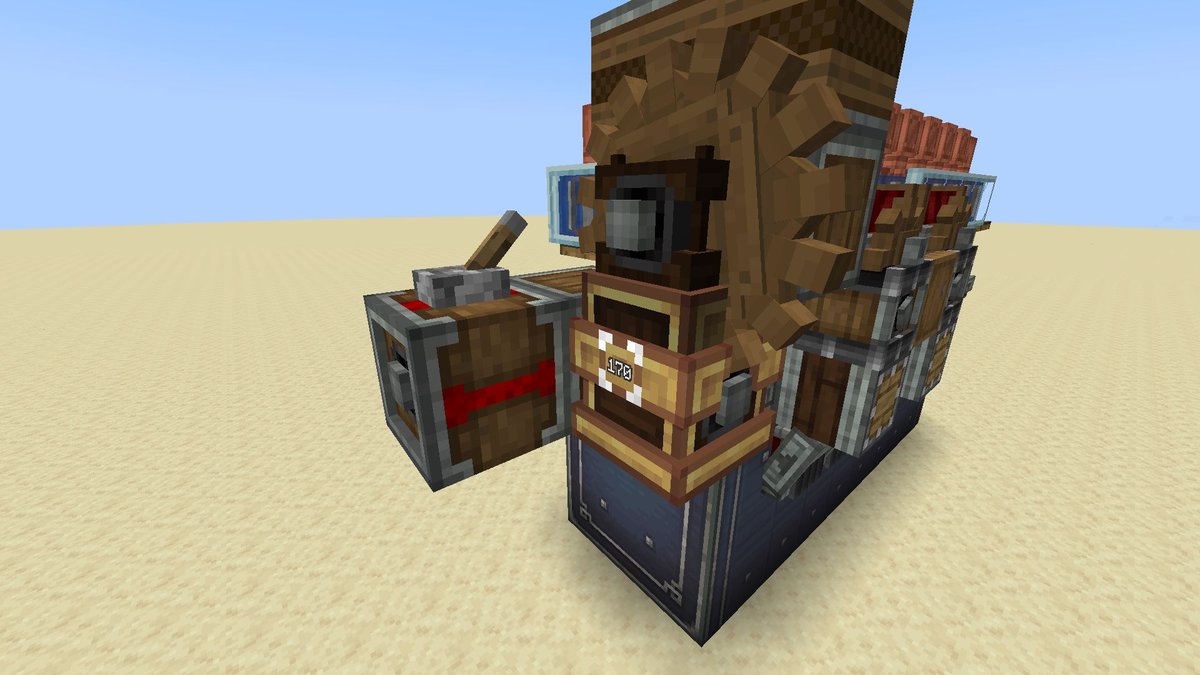
For many veteran Minecraft players, the simple act of punching trees and strip mining quickly gives way to the pursuit of automation. And when it comes to fundamental resources, few things signal a shift from manual grind to optimized efficiency quite like mastering Advanced Cobblestone Generator Concepts. This isn't just about placing water next to lava; it's about engineering ingenious systems that deliver infinite, effortless, and often fully automated supplies of one of the game's most versatile building blocks. Ready to elevate your base from humble beginnings to a bastion of boundless resources? Let's dig in.
At a Glance: Your Quick Guide to Advanced Cobble Gens
- Beyond the Basics: Advanced generators go far beyond simple 1-cobble-at-a-time designs, focusing on speed, convenience, and automation.
- Redstone is Key: Pistons, observers, comparators, and repeaters are essential for pushing, detecting, and automating block generation.
- TNT for Throughput: For truly massive output, fully automated designs often leverage TNT dupers to mine generated blocks without player input.
- Collection Systems Matter: Hoppers and water streams are critical for efficiently gathering thousands of blocks into storage.
- Safety First: When dealing with lava, TNT, and complex redstone, careful design and blast-proofing are non-negotiable to protect your base.
- Scalability is an Option: Many advanced designs can be expanded horizontally or vertically to multiply production rates.
The Unending Grind: Why Advanced Cobble Generators?
Every Minecraft player, at some point, faces the inevitable resource crunch. Cobblestone, in particular, is a foundational block—used in crafting furnaces, stone tools, building structures, and even as a raw material for more refined blocks like stone bricks. Initially, you mine it from caves and mountainsides. But that manual labor quickly becomes a bottleneck for ambitious projects.
That's where the humble cobblestone generator steps in, transforming a finite world into one of limitless possibility. The magic lies in a simple interaction: flowing water and flowing lava converging to create new cobblestone. While a basic 1x1 generator can get you by in the early game or a Skyblock scenario, it demands constant manual mining. Advanced Cobblestone Generator Concepts, however, are about transcending that bottleneck, leveraging Minecraft's mechanics—especially redstone—to create systems that are faster, more convenient, and, ultimately, fully automated. They free you from the pickaxe grind, allowing you to focus on grander builds and more complex contraptions.
To truly understand the "advanced," we first need to appreciate the journey from the rudimentary.
Understanding the Core: Water, Lava, and the Cobblestone Trinity
Before diving into complex machinery, a quick refresher on the fundamental interaction that makes all this possible:
- Water over still lava = Obsidian: If flowing water hits a stationary lava source block, obsidian is formed. Unbreakable by most early-game tools.
- Lava over still water = Stone: If flowing lava hits a stationary water source block, stone is formed. Mined with Silk Touch for stone, or Fortune for cobblestone.
- Flowing water + flowing lava = Cobblestone: The sweet spot. When both liquids are flowing and meet, they generate cobblestone. This is the basis of almost every generator.
The choice between generating cobblestone or stone often comes down to your pickaxe enchantments. Fortune is ideal for maximizing cobblestone output, while Silk Touch yields the more aesthetically pleasing stone blocks directly.
From Crude to Clever: The Evolution of Cobble Production
Let's trace the path from the most basic designs to the sophisticated automated behemoths, understanding the logic and utility behind each step.
1. The Simple Cobblestone Generator: Your First Stepping Stone
This is where everyone starts. It's the bare minimum, perfect for Skyblock islands or resource-scarce initial spawns. It gets the job done, but it's a manual, one-block-at-a-time affair.
What It Is: A compact, resource-efficient way to generate a single cobblestone block repeatedly.
Best For: Early game, Skyblock, emergency cobblestone needs. It's essentially your training wheels.
Materials (Minimalist Edition):
- 1 Water Bucket (or an Ice Block)
- 1 Lava Bucket
The Build in Brief:
- Dig a 4-block long, 1-block wide, 1-block deep trench.
- Break the second block from one end. This is where your cobble will generate.
- Place water at the end closest to the broken block. It will flow towards the gap.
- Place lava at the opposite end. It will flow towards the gap.
- Watch as the two liquids meet and create cobblestone in the broken block's spot.
Why it's "Advanced" for its Time: When you're scrabbling for resources, knowing this interaction is a game-changer. It represents the first step away from resource scarcity. However, its efficiency is severely limited.
2. The Popular Cobblestone/Stone Generator with Collection
Stepping up from the absolute basic, this design prioritizes convenience by integrating an item collection system. While often generating stone (which can be Fortune-mined for cobble), its core advancement is reducing the need to constantly pick up dropped blocks.
What It Is: A slightly more complex generator that channels generated blocks into a storage system, typically using hoppers and chests. It often produces stone by design.
Best For: Mid-game, when you have access to iron for hoppers and want a more organized supply line.
Materials (Getting More Involved):
- 2 Water Buckets
- 1 Lava Bucket
- 5 Inflammable Stairs (e.g., stone brick, nether brick)
- Inflammable Solid Blocks (e.g., stone, cobblestone)
- 5 Hoppers
- 2 Chests
- 1 Sign
The Build in Brief:
- Start by digging a hole for a double chest.
- Connect five hoppers in a line, with one feeding into the chest. This creates your collection funnel.
- Surround the hoppers and chest with solid blocks to form a protective shell.
- Place five stairs on top of the solid blocks that are above the hoppers. These will hold water.
- Create a second layer of solid blocks above the first, capping the sides.
- Place a sign at player head level above the chest—this prevents water from flowing into your collection area.
- Waterlog the stairs (fill them with water), then add a third layer of solid blocks to contain the water.
- Finally, place a lava bucket one block above the flowing water, right in the center.
The Advancement: The crucial element here is the integrated collection. No more running around to pick up items; they automatically funnel into chests. The use of stairs and signs to manage water flow demonstrates a subtle but significant understanding of liquid physics, a precursor to more complex redstone fluid management.
3. The Piston-Based Cobblestone Generator: Pushing for Convenience
This design introduces the power of redstone, specifically pistons, to push generated blocks into a more convenient mining position. It's an important conceptual leap because it externalizes the generation process.
What It Is: A generator that uses pistons to move freshly formed cobblestone blocks, creating a consistent line or wall of blocks for the player to mine.
Best For: Mid-game, small-scale industrial applications, improving mining convenience without full automation.
Materials (Redstone Ramps Up):
- 2 Water Buckets
- 1 Lava Bucket
- 8 Pistons
- 2 Redstone Torches
- 1 Redstone Repeater
- 11 Redstone Dust
- 5 Inflammable Stairs
- Inflammable Solid Blocks
- 1 Lever
The Build in Brief (for one module):
- Water Chamber: Place five stairs, surround them with solid blocks, and waterlog them to create a compact water source.
- Lava Chamber: Build solid blocks on top of the stairs and around the edges, extending them to form a contained area for lava.
- Redstone Power for Main Piston: Break a block diagonally downwards from a stair on one side. Place a redstone torch. Place a piston diagonally upwards from this torch, facing it. Add a solid block attached to this piston and one redstone dust next to it. This piston will typically push the generated block forward.
- Piston Line: On the opposite side of the first piston, place a row of eight pistons. Behind them, place solid blocks with redstone dust on top.
- Piston Line Redstone: Break a block diagonally downwards from the last piston in the row. Place a redstone torch in this hole.
- Redstone Clock/Timing: From this redstone torch, extend two redstone dust, then a redstone repeater (set to two ticks), and two more redstone dust, connecting into the redstone dust behind your row of pistons. This forms a basic pulse generator or clock.
- Lava Placement: Place lava one block above the first piston, in the center of your water/lava ring.
- Control: Add a lever on the solid block attached to the first piston to activate/deactivate the system.
The Advancement: The key innovation is the use of pistons. They automate the positioning of blocks, turning a single-block generation point into a continuous line. While still requiring manual mining, it's far more efficient. The introduction of redstone components like torches, repeaters, and dust signals a deeper dive into Minecraft's technical side. This setup is reliable for continuous output, albeit slower than fully automated designs. This is a great point to understand that the basics of redstone power your guide to cobble generators often start here with simple pistons and clocks.
4. The Fully Automated Cobblestone Generator: Unchained Production
Now we're talking true Advanced Cobblestone Generator Concepts. This is where the manual pickaxe is replaced by explosives (TNT) and complex redstone logic handles everything from generation to mining to collection. These are often large-scale, high-throughput systems designed for truly enormous resource demands.
What It Is: A sophisticated machine that autonomously generates cobblestone, mines it using TNT (often via a TNT duper), and funnels it into a vast storage system.
Best For: Late-game survival, mega-bases, technical Minecraft servers, or anyone who wants virtually infinite cobblestone without lifting a finger.
Materials (Extensive & Technical):
- Generator Core: Water Buckets, Lava Buckets, ~40 Leaves, 7 Sticky Pistons, 5 Pistons, 5 Target Blocks, 2 Observers, 1 Block of Redstone, 2 Redstone Comparators, 3 Redstone Repeaters, 6 Slime Blocks, 1 TNT, 1 Fence, 1 Dead Coral Fan, 1 Detector Rail, 1 Minecart, 3 Fence Gates, Redstone Dust, Solid Blocks, ~1.5 stack Obsidian, 2 Levers, 2 Slabs, Chests, Hoppers (at least 3), 1 Stair.
(Note: The materials list here is a broad overview, precise counts vary slightly with exact designs.)
The Generator Core Build (Simplified Overview):
- Piston Array: Start with five regular pistons facing your collection area, topped with waterlogged leaves to prevent lava interaction. These push the generated cobble forward.
- Lava Containment: Build an inflammable ring around the leaves to hold lava, defining the generation point.
- Cobble Detection (Observer): An observer is placed to detect when a new cobblestone block forms. This is the "brain" that triggers the next sequence.
- Sticky Piston Pullback: Below the regular pistons, a row of sticky pistons pulls the newly generated blocks downwards when triggered by the observer, preparing them for the next push.
- Redstone Logic: A complex network of redstone dust, target blocks (for optimal redstone signal), repeaters, and comparators creates a pulse circuit. This circuit ensures that after detection, the sticky pistons pull, then the regular pistons push, advancing the line of cobblestone.
- Lava Placement: Lava is carefully placed in the ring, ensuring it flows correctly to generate blocks.
- Disable Switch: A lever is integrated into the redstone to permanently power the sticky pistons, holding them up and stopping the generation process.
The TNT Duper Build (Simplified Overview): - Blast Area: An obsidian block is placed a safe distance from the generator, surrounded by a water-filled, obsidian-walled pit. This is where TNT will explode and cobble will be collected.
- Duper Structure: A floating redstone contraption, often involving slime blocks, a sticky piston, a fence, a detector rail, a minecart, and a TNT block. The specific arrangement causes the TNT to duplicate without consuming the original block, providing an infinite supply of explosives.
- Leaf Platform: A precisely positioned platform of leaves and fence gates is built to contain water and manage TNT blast physics, directing the explosion effectively.
- TNT Momentum Control: A solid block is placed to stop the duplicated TNT from flying off course, ensuring it explodes in the correct location.
The Etho Hopper Clock (TNT Duper Control): - Hopper-Comparator Circuit: Two hoppers are placed facing each other, with items inside. This creates a loop. Redstone comparators and repeaters detect the flow of items, generating a pulsing redstone signal.
- Sticky Piston & Redstone Block: Sticky pistons controlled by the comparator circuit move a redstone block back and forth between the hoppers, effectively toggling the signal on and off at a consistent interval.
- Connecting to Duper: This clock's output is connected to the sticky piston that activates the TNT duper, ensuring TNT is dispensed and exploded at regular intervals.
- Disable Switch: A lever or master switch is used to power the redstone dust that the observer faces, stopping the hopper clock and thus disabling the TNT duper.
The Collection System Build: - Explosion Chamber: An 11x11 obsidian platform with a 2-block tall wall contains the TNT explosions and dropped items.
- Water Streams: Water is strategically placed along the obsidian walls to create currents that sweep all dropped items towards a central collection point.
- Hopper Line: A series of hoppers is placed at the end of the water stream, feeding into a chain of chests for extensive storage.
- Access Stair: A stair is placed above the chest where the items are funneled, allowing player access while preventing items from stacking on top of the chest opening.
The Advancement: This is the pinnacle of automation. It combines multiple complex redstone systems—block generation, detection, movement, automated mining (TNT duper), and item collection—into a single, self-sustaining machine. The ability to generate vast quantities of cobblestone without player intervention is the ultimate goal of advanced resource gathering in Minecraft.
Potential Pitfalls: These complex systems can be temperamental. Misplaced redstone, incorrect timings, or pushing too many blocks can lead to lava deletion (if pistons reach their push limit and delete the lava source) or redstone glitches. Precision and testing are paramount.
Beyond the Blueprint: Advanced Concepts in Practice
Building an automated generator is one thing; optimizing and maintaining it is another. Here are some deeper concepts to consider as you venture into advanced cobblestone generation:
Expandability and Modularity
The fully automated design mentioned above is often built as a single module. But what if you need more? Many advanced generators are designed to be modular. This means you can build multiple identical or slightly modified units side-by-side, or stacked vertically, to exponentially increase output.
- Horizontal Expansion: Create a longer piston line with more generation points, or duplicate entire generator cores.
- Vertical Stacking: Build layers of generators, often sharing a central collection shaft. This is common in "mega farms" that produce hundreds of thousands of items per hour.
Efficiency and Throughput
This is where the numbers come into play. Efficiency is measured in cobblestone per hour (c/h).
- Manual Mining: A simple generator yields only as much as you can mine (a few thousand c/h at best with Haste II and Efficiency V).
- Piston-Pushed: These improve convenience but still rely on your mining speed.
- Fully Automated: These are the real powerhouses. The "Most Advanced Cobblestone Generator Ever Made!" (as referenced by the community) can produce anywhere from 32,400 to over 230,000 cobblestone per hour. This staggering output is achieved through synchronized, high-speed generation and mining.
Consider the resource cost vs. output. A simple generator is cheap but slow. A fully automated one is expensive in initial build costs but offers infinite, passive returns.
Collection Systems: The Unsung Heroes
A generator is useless if you can't collect its output.
- Hoppers: The backbone of most collection systems. They are slow individually but can be chained together.
- Water Streams: Far more efficient for moving large quantities of items over distances, especially when combined with hoppers at the end of the stream.
- Minecart Hoppers: For very long distances or tricky elevations, minecart hoppers on rails can be used to transport items.
- Sorting Systems: For highly advanced bases, you might integrate item filters and sorters to separate cobblestone from other potential drops (though cobblestone generators rarely produce anything else).
Automated Mining Techniques
While TNT dupers are the most common method for automated cobblestone mining due to their infinite nature, other methods exist for different block types or scales:
- Wither Farms: A truly extreme method where a Wither boss is confined and forced to break blocks for collection. This is generally overkill and more complex for just cobblestone.
- Block-Breaking Redstone: More advanced and compact designs might use specific block update detectors and piston feeders to break blocks rapidly, but TNT remains supreme for sheer volume.
Mastering Redstone Logic
Advanced generators are redstone puzzles. Understanding these components is vital:
- Observers: Detect block changes. The eye of your generator.
- Pistons & Sticky Pistons: The muscle, pushing and pulling blocks.
- Repeaters: Control signal delay and direction, also strengthen signals.
- Comparators: Detect item counts in containers or perform arithmetic operations. Crucial for hopper clocks.
- Target Blocks: Conduct redstone signals effectively and absorb redstone dust signals from all sides.
- Clocks: Circuits that generate a repeating redstone pulse. Essential for timing piston pushes or TNT activations. The Etho Hopper Clock is a prime example of a robust, adjustable clock.
Material Considerations and Safety
- Inflammable Blocks: Always use blocks like stone, cobblestone, or netherrack around lava sources to prevent your contraption from burning down.
- Blast Resistance: For TNT dupers, obsidian is your best friend. It's blast-resistant, preventing your collection area from being destroyed by explosions. Water also provides excellent blast protection.
- "Fail-Safes": Design your redstone with emergency shut-offs. A simple lever to disable a clock or power a piston can prevent runaway systems or lava deletion.
Optimizing for Fortune vs. Silk Touch
Your generator can serve different purposes depending on how you (or your automated miner) interact with the blocks:
- Fortune: To maximize actual cobblestone output, you'd want an automated system that applies Fortune III to the mined blocks, or you'd manually mine with a Fortune pickaxe.
- Silk Touch: If you need raw stone blocks for building, a Silk Touch pickaxe (or an automated system mimicking one) is necessary. Most fully automated TNT-based generators default to giving you cobblestone, as TNT explosions yield raw drops.
Common Questions and Troubleshooting for Your Advanced Builds
Even the most seasoned engineers encounter issues. Here's a quick Q&A for common advanced generator problems:
Q: My lava keeps disappearing! What's going on?
A: This is usually due to pistons pushing too many blocks. If a piston pushes its limit (12 blocks), and a lava source block is directly adjacent to the last block it pushed, the lava source can be removed. Ensure your piston lines are cleared or reset before they reach this limit. In automated designs, careful timing and block detection prevent this.
Q: My redstone clock is too fast/slow, or not working at all.
A:
- Too Fast/Slow: Adjust the delay on repeaters or the number of items in a hopper clock. More items in one hopper of an Etho clock generally slow it down.
- Not Working: Check all connections. Is every piece of redstone dust powered? Are repeaters facing the correct direction? Is there enough power (max 15 blocks for redstone dust)? Are comparators in the right mode (subtraction vs. comparison)?
Q: Items aren't flowing into my chests.
A: - Hoppers: Ensure hoppers are pointing into the chests or into other hoppers that lead to chests. Check that the chest isn't full.
- Water Streams: Make sure the water flows consistently to the hopper input. No blockages, no source blocks accidentally placed mid-stream, and the stream isn't too long for items to despawn.
Q: My TNT duper isn't duping TNT, or the TNT explodes in the wrong spot.
A: - Duper Failure: Double-check every block placement in your duper (slime blocks, fence, rail, minecart, coral fan, piston). Even a single block misplaced will break it. Ensure the sticky piston activating it gets a 1-tick pulse.
- Wrong Spot: This is often due to incorrect timing from the clock or the TNT duper itself not being perfectly synchronized. Adjust repeater delays or the hopper clock speed. The leaf platform and solid block designed to stop TNT momentum are critical here.
Choosing Your Path to Infinite Cobble
Deciding which advanced generator is right for you boils down to a few key considerations:
- Your Technical Comfort Level: Are you comfortable with complex redstone, or just starting to learn? Simple piston designs are great entry points.
- Resource Availability: Do you have ample iron for hoppers, sticky pistons for advanced designs, or obsidian for blast-proofing?
- Desired Output: Do you need a few stacks for a build, or tens of thousands for a mega-project? This will dictate the scale.
- Automation Level: Do you want to manually mine but with convenience, or truly set-and-forget?
- Server Lag: On multiplayer servers, extremely high-throughput, redstone-heavy farms can contribute to lag. Be considerate of other players.
For casual players who want a boost, the Piston-Based generator offers a good balance of automation and simplicity. For those building immense structures or operating a major server hub, investing the time and resources into a Fully Automated design with a TNT duper is unequivocally worth it. Remember, these concepts are continually evolving within the Minecraft community, with dedicated engineers pushing the boundaries of what's possible.
The Future of Resource Gathering: Limitless Potential
The world of Minecraft redstone is constantly innovating. Builders are finding ways to make generators faster, more compact, more reliable, and integrate them into even larger mega-farms. The "Most Advanced Cobblestone Generator Ever Made!" mentioned earlier exemplifies this pursuit, boasting features like:
- Massive Throughput: Over 230,000 cobblestone per hour in optimal conditions.
- Expandability: Easily scaled to meet even the most extreme demands.
- No Precision Mechanisms/Stress Units: Designed for stability, avoiding fragile timings often found in other complex builds.
- Automatic Shut-off: Shuts down if storage chests are full, preventing overflow and wasted resources—a vital feature for truly autonomous systems.
As you explore these Advanced Cobblestone Generator Concepts, you're not just building a machine; you're learning the underlying principles of redstone engineering, resource management, and problem-solving that are applicable across all facets of Minecraft. So grab your buckets, gather your redstone, and get ready to revolutionize your resource gathering. The days of endless mining are over; the era of automated abundance has begun!