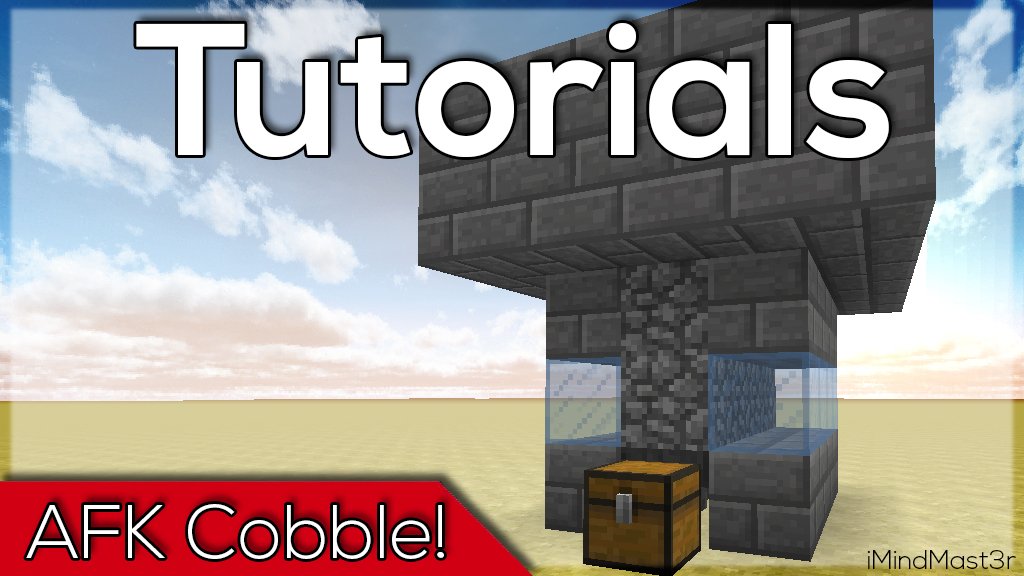
Ask any seasoned Minecraft player what their most used block is, and chances are, it's cobblestone. From building your first shelter to crafting advanced Redstone contraptions, cobblestone is the backbone of survival and creativity. But manually mining stacks upon stacks can quickly become tedious. That’s where Automatic & AFK Cobblestone Generators come in, revolutionizing your gameplay by providing a virtually infinite supply of this essential material, completely hands-free or with minimal effort. Imagine never running out of blocks for smelting, building, or even trading – that's the power we're unlocking today.
At a Glance: Your Infinite Cobblestone Guide
- What it is: A system that automatically produces cobblestone from interacting flowing water and lava.
- Why you need it: Provides an unlimited, passive source of cobblestone, especially crucial in resource-scarce maps like Skyblock.
- Basic Principle: When flowing water meets flowing lava, it creates a cobblestone block.
- Essential Gear: You'll need water and lava buckets, a pickaxe, and some solid, non-flammable blocks.
- Simple Setup: Start with a basic 1x1 generator, easily built with just a few blocks and buckets.
- Scaling Up: Learn to expand your generator for higher output, producing multiple blocks simultaneously.
- Going AFK: Integrate hoppers and chests for automatic collection, letting you step away while your materials pile up.
- Advanced Automation: Explore complex Redstone designs involving pistons, TNT dupers, and clever timing for fully automated destruction and collection.
- Key Enchantments: Use Silk Touch for stone, or Fortune for more cobblestone per block mined.
- Pitfall to Avoid: Understand the water/lava interaction to prevent obsidian or accidental destruction.
Why Cobblestone is the Undisputed King of Blocks
In the vast world of Minecraft, cobblestone isn't just a humble building material; it's a fundamental resource that underpins almost every aspect of progression. You'll use it to craft furnaces, stone tools, dispensers, droppers, and even advanced Redstone components like pistons and observers. It's an indispensable ingredient for constructing massive builds, expanding your base, or simply surviving the night.
The demand for cobblestone can feel endless, especially when you embark on large-scale projects or play on maps with limited natural resources, such as Skyblock. Constantly needing to find and mine stone can interrupt your flow and turn fun into a chore. This relentless demand is precisely why mastering the art of the cobblestone generator isn't just a neat trick; it's a vital skill for any serious player looking to optimize their time and resource gathering.
The Elemental Dance: How Cobblestone Generators Actually Work
At its heart, a cobblestone generator exploits a fundamental interaction between two opposing forces in Minecraft: flowing water and flowing lava. This magical clash consistently results in the creation of a cobblestone block. But the exact outcome depends on how these two liquids meet:
- Flowing Water + Flowing Lava = Cobblestone: This is the golden rule for your generator. When both liquids are actively moving and collide, cobblestone forms at their intersection point.
- Flowing Water + Still Lava (Source Block) = Obsidian: If flowing water hits a lava source block, the lava transforms into obsidian. This is great for obtaining obsidian but terrible for a cobblestone generator.
- Flowing Lava + Still Water (Source Block) = Stone: When flowing lava meets a water source block, it solidifies into regular stone. While useful, it's not the primary goal of a typical cobblestone farm unless you specifically desire stone.
Understanding these interactions is key to designing an effective generator. Your goal is to create a channel where flowing water and flowing lava consistently meet at a single point, allowing you to mine the resulting cobblestone and have a new block instantly form in its place.
The Power of Enchantments
When you start mining your generated blocks, don't forget your pickaxe enchantments:
- Silk Touch: If you want to gather smooth stone instead of cobblestone, a pickaxe enchanted with Silk Touch will allow you to break the generated stone blocks (if your generator is set up to produce stone) and collect them directly. For cobblestone generators, it will still yield cobblestone unless the interaction specifically results in stone.
- Fortune: A pickaxe with the Fortune enchantment is a game-changer. It increases the number of drops from mined blocks, meaning you'll get more cobblestone per block broken, dramatically boosting your output.
Gearing Up: What You'll Need for Your First Generator
Before you start digging, gather these essential items. They're all relatively easy to acquire early in your survival journey:
- 1 Water Bucket: Critical for the "flowing water" component.
- 1 Lava Bucket: Equally crucial for the "flowing lava" component.
- Pro Tip for Skyblock: If you're on a Skyblock map, you might start with an ice block. Breaking it gives you water. To get lava, you often need to combine water with a single lava source (which sometimes spawns or can be traded for) to create an obsidian platform, then mine for more lava in the Nether. Alternatively, some Skyblock designs involve using only a single lava source and creating a finite water pool that continuously replenishes a flowing stream.
- 3 Iron Ingots: You'll need these for each bucket (crafting pattern is a V shape in the crafting grid).
- 1 Furnace: To smelt iron ore into ingots.
- Solid, Non-Flammable Blocks: Any block that won't burn and can hold water and lava. Cobblestone, dirt, stone, and clay are perfect. You'll need at least 5-10 for a basic setup.
- 1 Pickaxe: To mine your newly generated cobblestone. An iron pickaxe or better is recommended for efficiency.
Your First Infinite Quarry: Building a Basic Cobblestone Generator
Let's start with the simplest, most fundamental design. This generator is quick to build and perfect for getting your initial stacks of cobblestone.
- Preparation: Find a flat area, or build a small platform using your solid blocks.
- Dig the Water Channel (Step 1): Dig a 1-block deep hole. Right next to it, dig another hole that's 2 blocks deep.
- Visual:
[ ] [ ] [ ]
[ ] [D] [ ] <-- D is 1-block deep
[ ] [ ] [ ]
Then,
[ ] [ ] [ ]
[ ] [D] [D2] <-- D2 is 2-blocks deep
[ ] [ ] [ ]
- Place the Water: Put your water bucket in the 1-block deep hole. The water will flow into and fill the 2-block deep hole.
- Visual:
[ ] [ ] [ ]
[ ] [W] [F] <-- W is water source, F is flowing water (2-blocks deep)
[ ] [ ] [ ]
- Dig the Lava Channel (Step 2): Skip one block from the 2-block deep hole (where the water is flowing). Then, dig a new 1-block deep hole.
- Visual:
[ ] [ ] [ ]
[ ] [W] [F] [ ] [L] <-- L is new 1-block deep hole
[ ] [ ] [ ]
- Place the Lava: Put your lava bucket in this newly dug 1-block deep hole. The lava will begin to flow towards the water.
- Break the Barrier: The magic happens now. Break the single block that separates the flowing water from the flowing lava. In a second or two, a cobblestone block will form exactly where they meet!
- Visual before breaking:
[ ] [ ] [ ]
[ ] [W] [F] [B] [L] <-- B is the block you break
[ ] [ ] [ ] - Visual after breaking and cobblestone forms:
[ ] [ ] [ ]
[ ] [W] [C] [L] <-- C is the new Cobblestone!
[ ] [ ] [ ]
- Mine and Repeat: Mine the cobblestone block. Another will instantly generate in its place. You've created an infinite source!
Troubleshooting: Why Am I Getting Obsidian?
If you're getting obsidian instead of cobblestone, it almost always means flowing water is hitting a lava source block. Double-check that:
- The lava you placed is indeed flowing.
- The water is also flowing.
- Crucially, the block where the water flows into (the 2-block deep hole in our example) is deep enough so that the lava meets flowing water, not the water source itself. The 2-block deep hole for the water ensures this.
This simple generator is the foundation for all advanced designs. You can find more detailed visual guides and variations, including how to build a basic cobble generator with step-by-step imagery, to help ensure your first build is a success.
Leveling Up: Beyond Basic Cobblestone Production
Once you've mastered the basic 1x1 generator, you'll likely crave more. More cobblestone, faster, and with less effort. Let's explore how to expand and automate your operation.
Scaling Up: Expanding Your Output
The 1x1 design is efficient, but it only produces one block at a time. To ramp up production, you can create an extended generator that yields multiple cobblestone blocks simultaneously.
- Extend the Water Channel: Start with your basic generator's water source and its 2-block deep flowing channel. Now, extend this 2-block deep channel to be 4 blocks long in total.
- Create Lava Trenches: Parallel to this extended water channel, dig three additional 1-block deep "trenches," each 4 blocks long. These will be for your flowing lava. You're essentially creating a 4x4 area where water and lava will meet.
- Place Sources: Place water sources along one side of the 4x4 grid (at the end of your extended 2-block deep channel) and lava sources along the opposite side.
- Observe the Flow: Water and lava will flow and meet, forming a 4x1 line of cobblestone blocks. You can mine these four blocks in quick succession, significantly boosting your manual yield.
- Note: You can scale this even larger (e.g., 8x1, 16x1) depending on your needs and available materials.
Hands-Free Mining: Adding Automatic Collection
Mining multiple blocks at once is great, but wouldn't it be better if you didn't have to pick them up yourself? That's where automatic collection systems come in, paving the way for AFK (Away From Keyboard) farming.
- Build Your Generator (Expanded): Start with an expanded cobblestone generator, perhaps a 4x1 design.
- Dig Below: Dig two blocks directly below where the cobblestone generates.
- Place Hoppers: In the first layer directly under the generator, place a row of hoppers. Hoppers suck up items that fall onto them and funnel them into inventories below. Ensure they are facing the direction you want the items to flow (typically into chests).
- Place Chests: In the second layer (below the hoppers), place a row of chests. Connect the hoppers to these chests.
- Tip: You can connect multiple chests together to create a "double chest" for more storage, and chain hoppers to lead items to a single, centralized chest system.
- Seal It Off: You can now enclose the system to prevent items from flying out, though this isn't strictly necessary for functionality.
Now, when you mine the cobblestone, the items will automatically drop into the hoppers and be stored in your chests. To make this truly AFK, you would still need an auto-clicker program (allowed on some servers, not others) or a physical setup to continuously break the blocks.
The Piston Push: Semi-Automatic Generators
For those who want to mine without constantly repositioning or having to use an auto-clicker, piston-based generators are an excellent semi-automatic solution. These designs use Redstone to push generated cobblestone blocks into a single, accessible mining spot.
- Generator Core: Build a basic 1x1 cobblestone generator.
- Piston Placement: Place a piston (facing the direction you want the blocks pushed) directly behind the spot where the cobblestone forms.
- Redstone Clock: Create a simple Redstone clock circuit (using Redstone torches, repeaters, and Redstone dust, often with a lever to control it) that repeatedly activates the piston.
- How it works: When the cobblestone forms, the Redstone clock triggers the piston, pushing the block forward. Another cobblestone block then forms in the original spot, ready to be pushed again.
- Mining Station: The piston will push blocks into a line. You can stand at the end of this line and mine continuously without moving, as new blocks are pushed directly to you.
Piston-based generators are slower than raw manual mining of an expanded farm, but they offer stability and significantly reduce movement. They're a great stepping stone towards full automation, requiring a basic understanding of Redstone.
True AFK: Fully Automated Cobblestone Farms
For the Redstone connoisseur, the ultimate goal is a fully automated cobblestone farm. These complex contraptions generate, destroy, and collect cobblestone without any player interaction once activated. They often involve ingenious mechanics to achieve maximum efficiency.
Key Components of Advanced AFK Farms:
- Generator Core: The heart remains the flowing water and lava interaction.
- Piston Array: Instead of just one piston, a line of pistons (often sticky pistons) is used to push hundreds of blocks into a destruction chamber. They are activated by a Redstone signal, typically from an observer clock or an Etho hopper clock.
- TNT Duper: This is the game-changer for automatic destruction. A TNT duper is a Redstone contraption that abuses game mechanics to create infinite TNT without consuming any. The duped TNT is then used to explode the pushed cobblestone blocks.
- Warning: TNT dupers are often considered "exploits" or "glitches" by some players and server rules. Always check server policies before implementing one.
- Etho Hopper Clock (or similar timing circuit): A reliable Redstone clock mechanism that provides precise timing for the TNT duper and piston pushes, ensuring blocks are destroyed efficiently.
- Item Collection System: A comprehensive network of hoppers and water streams to collect the blasted cobblestone drops and funnel them into massive chest arrays for storage.
- Redstone Components: A significant amount of Redstone dust, repeaters, comparators, observers, sticky pistons, slime blocks, and sometimes even target blocks or note blocks are used to create the intricate timing and logic circuits.
Building a Monster: The Process
While the exact blueprints vary wildly (you can find countless tutorials on YouTube and Minecraft forums), the general flow for a fully automated farm looks like this:
- Build the Cobblestone Generator Core: Often a single 1x1 point, but sometimes expanded for initial block generation speed.
- Piston Push Line: Pistons are placed to push the generated cobblestone blocks into a long line.
- TNT Duper Integration: A TNT duper is positioned to drop TNT strategically, usually at the end of the piston line, to explode the pushed blocks.
- Redstone Timing Circuit: An advanced Redstone clock (like an Etho hopper clock) controls the pistons and the TNT duper, synchronizing their actions for continuous operation.
- Collection and Storage: A vast array of hoppers and chests are placed below the destruction zone to catch all the dropped cobblestone. Water streams can assist in directing items to the hoppers.
A Critical Warning: Piston Limits and Lava Destruction
When building piston-based generators, especially fully automated ones, be acutely aware of the piston push limit. A piston can only push 12 blocks at once. If your generator's pistons try to push more than 12 blocks, the blocks beyond the limit will not be pushed.
More dangerously, if a piston pushes lava or water beyond its source block, or if its push limit is reached in a way that displaces a source block of lava or water, it can cause the liquid to disappear permanently. This can break your generator and potentially destroy surrounding blocks if it's a lava source. Always include a lever or switch to easily disable your Redstone clock and pistons when you're not actively using the generator or when performing maintenance. This simple precaution prevents accidental lava deletion and system damage.
Choosing Your Generator: Which Design Is Right for You?
With several options available, deciding which cobblestone generator to build depends on your playstyle, technical skill, and resource availability.
- For the Absolute Beginner: Stick with the Basic 1x1 Generator. It’s quick, cheap, and gets you mining in minutes. It's the perfect way to learn the mechanics without committing many resources.
- For the Developing Survivalist: The Basic Generator with an Automatic Collection System (hoppers and chests underneath) is your best friend. It significantly reduces tedious pickup and is a gentle introduction to basic automation. This is particularly vital for Skyblock maps where resource management is paramount.
- For the Redstone Novice (or for less active play): A Piston-Based Semi-Automatic Generator is an excellent next step. It introduces you to basic Redstone logic, allows for AFK mining without an auto-clicker (just stand still), and provides a steady, albeit slower, stream of resources.
- For the Experienced Redstone Engineer: Dive into a Fully Automated Generator with TNT dupers and advanced Redstone clocks. These are endgame projects that demand significant resources and technical know-how but reward you with truly boundless and effortless cobblestone production. Just remember to check server rules regarding TNT dupers.
Troubleshooting Common Cobblestone Generator Issues
Even the simplest designs can sometimes go awry. Here's how to fix the most common problems:
- "I'm getting Obsidian instead of Cobblestone!"
- The Fix: This means flowing water is hitting a lava source block. Ensure your lava is flowing when it meets the water. If using the simple 1x1 design, make sure the water's flow channel is 2 blocks deep before the lava meets it. This guarantees the water is flowing, not a source.
- "My Lava or Water Disappeared!"
- The Fix: This usually happens when a piston pushes a liquid source block. Ensure your pistons are only pushing generated cobblestone blocks, not the water or lava source blocks. Always have a master switch for Redstone contraptions to disable them easily.
- "My Production Seems Too Slow / It Stops Generating!"
- The Fix: For manual generators, check that you're mining the exact block where water and lava meet. For piston-based ones, ensure your Redstone clock is functioning correctly and isn't being overloaded or stopped. If you're building a very large generator, sometimes a tiny inconsistency in water/lava flow can cause issues; double-check every source block.
- "Items Aren't Being Collected by Hoppers!"
- The Fix: Make sure your hoppers are facing into the chests or other hoppers. Right-click on a hopper while sneaking to connect it to a chest or another hopper. Items will only flow into the mouth of the hopper. Also, ensure the hoppers aren't "locked" by a Redstone signal.
Optimizing Your Cobblestone Farm for Maximum Efficiency
Once your generator is reliably producing, you can tweak it to squeeze out even more performance.
- Enchant Your Pickaxe: As mentioned, a pickaxe with Fortune III will dramatically increase your cobblestone yield. If you need smooth stone for building, a Silk Touch pickaxe will let you collect raw stone blocks. Pair it with Unbreaking III and Mending for durability.
- AFK Spot Placement: If you're using an auto-clicker or a simple piston farm, ensure your AFK spot is safe from mob spawns. Light up the area, wall yourself in, or build high in the sky.
- Chunk Loading (Advanced): For truly massive, fully automated farms that run even when you're far away, you'll need to use chunk loaders. These advanced Redstone contraptions keep specific chunks active and processed by the game, ensuring your farm never stops generating or collecting.
- Pre-Sorting Systems: For very high-output farms, consider adding item sorting systems after your collection chests. This keeps your cobblestone separate from other potential drops (like stone, if you vary your generator) and makes managing your inventory much easier.
- Vertical Expansion: Instead of just expanding horizontally, you can stack simple generators vertically, connecting them to a single collection system. This saves space and can often be more efficient in terms of Redstone complexity for a given output.
Beyond Cobblestone: Creative Uses for Your Infinite Supply
Your infinite cobblestone doesn't just sit in chests; it opens up a world of possibilities:
- Massive Builds: Dream of building a colossal castle, an epic bridge, or an entire city? Your cobblestone generator makes it feasible.
- Smelting Fuel: Cobblestone can be smelted into stone, which can then be crafted into stone bricks, smooth stone, or even used as fuel itself (though coal or lava buckets are more efficient).
- XP Farming: If you smelt large quantities of cobblestone into stone, you'll gain experience points, which is a great way to repair tools with Mending or level up enchantments.
- Villager Trades: Stone-related blocks are often traded by Stone Masons and other villagers, allowing you to exchange your surplus for valuable emeralds.
- Blast Furnaces: Your stone can be used to craft blast furnaces, speeding up ore smelting.
From your very first simple hole in the ground to a sprawling, fully automated Redstone marvel, Automatic & AFK Cobblestone Generators are a testament to Minecraft's ingenuity. They free you from the grind, allowing you to focus on the truly creative and adventurous aspects of the game. So, grab those buckets, dig those channels, and start generating your way to infinite possibilities.