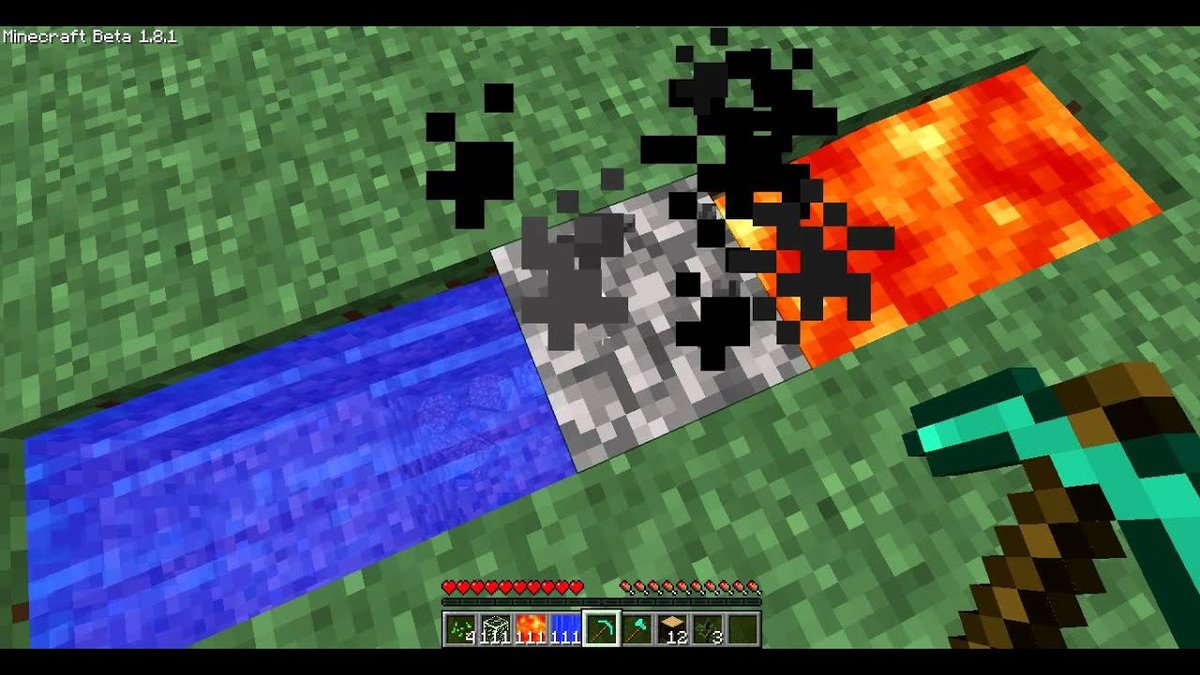
Every seasoned Minecraft player knows the value of a steady, infinite supply of resources. And when it comes to construction, crafting, or even just filling your inventory, cobblestone reigns supreme. Forget endless mining trips; with a clever setup, you can generate all the cobblestone you'll ever need, right at your fingertips. We're talking about the magic of a cobble generator!
Building a robust cobblestone farm is a game-changer, turning basic elements into a limitless resource. Whether you're just starting your survival world or looking to supercharge your industrial operations, understanding how to construct these invaluable contraptions is key. For a deep dive into the underlying principles and benefits, you'll want to Learn about cobblestone generators and see why they're essential for any thriving base.
The Heart of the Matter: Water, Lava, and Infinite Blocks
At its core, a cobblestone generator leverages a fundamental interaction within Minecraft: water meeting lava. The precise way these two liquids collide determines what block is created.
- Flowing water over a still lava source gives you obsidian. This tough block is crucial for Nether portals and enchanting tables, but it requires a diamond pickaxe.
- Flowing lava touching a still water source creates stone blocks. These are aesthetically pleasing and can be mined with a Silk Touch pickaxe to preserve their smooth texture.
- Flowing lava and flowing water together results in our desired cobblestone. This is the most common and versatile block for general building and crafting.
It's a simple yet powerful mechanic that underpins every generator design. To ensure you're always prepared for your next big build, you'll want to Explore Building Materials beyond just water and lava.
Start Small, Build Big: Simple Manual Cobblestone Generators
When resources are tight, or you just need a quick supply, basic manual generators are your best friend. They require minimal items and are straightforward to build, making them perfect for early-game survival or challenge maps like Skyblock.
The Essential 4x1 Hole Design
This is the absolute simplest way to get infinite cobblestone. It's a foundational build for many players.
- Required Items: 1 bucket of water (or 1 ice block), 1 bucket of lava.
- Steps:
- Dig a 4-block long, 1-block wide, and 1-block deep trench.
- Break the second block from one end, making it 2 blocks deep at that spot.
- Place water in the 1-block deep end, closest to the 2-block deep section. (Alternatively, place an ice block and break it.)
- Place lava on the other end of the trench, 2 blocks away from the 2-block deep section.
- Watch as new cobblestone blocks continuously appear in the middle!
- Notes: This design is very low efficiency, generating one block at a time. For safety and to prevent accidental falls or item burning, consider covering the water and lava sources with non-flammable blocks like cobblestone or dirt.
Upgraded Stone Generator with a Basic Collection System
This design prioritizes collecting the generated blocks, producing stone by default but easily yielding cobblestone with the right tool.
- Required Items: 1 double chest, 5 hoppers, solid blocks, 5 stairs, 1 sign, 1 lava bucket, 1 water bucket.
- Steps:
- Start by placing a double chest in the ground.
- Connect five hoppers to the chest, ensuring one hopper feeds directly into it from above.
- Surround the hoppers and chest with sturdy, solid blocks.
- Place five stairs on the solid blocks directly above and attached to the hoppers.
- Add another layer of solid blocks on top of the initial surrounding blocks.
- Place a sign on a solid block positioned above the chest, at head level. This helps control water flow.
- Waterlog the stairs, creating a flowing water channel.
- Build a third layer of solid blocks above the stairs, existing blocks, and the sign.
- Finally, place a lava bucket one block above the flowing water, centered in your setup.
- Notes: Stand on the chest and break the continuously generated stone blocks. Remember, to get cobblestone directly from this setup, you'll need a pickaxe enchanted with Fortune. If you're keen on optimizing your resource collection and want more options for these foundational setups, dive into Simple cobblestone generator designs for even more ideas.
Stepping Up: Automated & AFK Cobblestone Generators
Once you've mastered the basics, it's time to let Redstone do the heavy lifting. Automated generators can significantly boost your output, allowing you to go AFK (away from keyboard) and return to mountains of cobblestone.
Automated Cobblestone Generator with Pistons
This design introduces Redstone to automatically push generated cobblestone towards you, centralizing your mining efforts.
- Required Items: Stairs, solid blocks, water bucket, lava bucket, Redstone torch, 9 pistons, Redstone dust, Redstone repeater, lever.
- Steps (One Module):
- Place five stairs and surround them with solid blocks. Waterlog the stairs to contain the water.
- Create a lava holding area by placing solid blocks on top of the stairs and along the edges, extending the line with two blocks on either end. Connect these ends to form a ring.
- Dig a hole diagonally downwards from a stair on one side and place a Redstone torch in it.
- Place a piston diagonally upwards from the Redstone torch, facing it.
- Attach a solid block to this piston and place Redstone dust next to it.
- Place 8 pistons in a row, attached to the opposite side of the first piston.
- Build a solid block platform behind these 8 pistons and cover it with Redstone dust.
- Dig a hole diagonally downwards from the last piston in the row and place another Redstone torch.
- Connect this torch with two Redstone dust, then one Redstone repeater, and two more Redstone dust, linking back to the main Redstone line behind the 8 pistons.
- Place lava one block above the first piston, in the center of the ring.
- Add a lever to the solid block attached to the very first piston.
- Notes: Flipping the lever will kickstart the generator, causing cobblestone to generate and pistons to push it. This allows for continuous mining from a single spot. Flip the lever again to permanently power the first piston and stop the machine. This design is reliable but can be slow. A collection system can always be added underneath for more automation.
The Ultimate Cobble Machine: Fast & Furious TNT Duper Generators
For players who demand maximum output, a TNT duper-powered generator is the answer. These complex contraptions use automated TNT blasts to break blocks at incredible speeds, funneling them into massive collection systems. Building one is a badge of honor for any Redstone enthusiast. If you're serious about scaling up your operations, our dedicated guide on Automatic & AFK Cobblestone Generators will walk you through even more high-efficiency designs like this.
Fast Cobblestone Generator with TNT Duper and Hopper Clock
This advanced design integrates multiple Redstone mechanics for ultra-high-speed cobblestone production.
1. Generator Section
This part is responsible for the rapid generation and initial pushing of the cobblestone.
- Required Items: 5 regular pistons, leaves, inflammable solid blocks, 1 observer, 5 sticky pistons, 5 target blocks, Redstone dust, 1 Redstone repeater, 1 lever, lava bucket.
- Steps:
- Place 5 regular pistons facing towards where your collection system will be.
- Place 5 leaves on top of these pistons and waterlog them.
- Build a one-block wide ring of inflammable solid blocks on top of the leaves, extending one block past on either end, creating the lava holding area towards the pistons.
- Place an observer on one end of this ring, one block below and in the center, facing the leaves. Place a solid block directly behind the observer.
- Place 5 sticky pistons diagonally downwards from the regular pistons, facing upwards.
- Adjacent to these sticky pistons, dig a 5-block long, one-block wide trench and place the 5 target blocks within it.
- Next to the target blocks, dig a 6-block long, one-block wide trench (starting from the edge opposite the observer) and fill it with Redstone dust.
- Place Redstone dust under the solid block the observer is attached to, and connect it to the Redstone dust line next to the target blocks.
- Attach solid blocks to the side of the regular pistons at the back of the generator. Place Redstone dust on them and extend it with two more Redstone dust, connecting to the other Redstone dust line.
- Link these two Redstone lines with a repeater, set to two ticks (right-click once), facing towards the line behind the pistons.
- To disable the generator, attach a lever to the Redstone line just before the repeater. This will power the sticky pistons and halt the farm.
- Finally, introduce lava into the ring you created.
2. TNT Duper Section
This ingenious mechanism creates and drops TNT without consuming actual TNT blocks, making your generator truly infinite.
- Required Items: Obsidian, slime blocks, fence, detector rail, minecart, TNT, dead coral fan, sticky piston, leaves, fence gates, solid blocks (for TNT momentum control), water bucket.
- Steps:
- Exactly 12 blocks from the center of the regular pistons, place an obsidian block a couple blocks down. Dig a large hole around it for the collection system.
- Pillar up 15 blocks from the obsidian block.
- Diagonally upwards from the top block, place a slime block, then two more attached to it, forming an L-shape.
- Place a fence attached to the topmost slime block.
- Adjacent to the fence, place three more slime blocks, creating another L-shape.
- Place a detector rail on the slime block directly attached to the fence, and a minecart on top of it.
- Add a TNT block directly under the fence.
- Place a dead coral fan attached to the slime block next to the TNT.
- Add a sticky piston facing towards the rest of the TNT duper, attached to the slime block next to the rail.
- Construct a 5x5 vertical platform of leaves. The top center leaf block should be attached to the slime block one block below the one attached to the sticky piston.
- Create a two-block long, 5-block wide platform attached to the bottom center block of the leaf platform. Add two more leaf blocks on either side to form a "big leaf armchair."
- Place three fence gates diagonally upwards from the edge of the leaf blocks (not attached) to contain water.
- Temporarily remove those three leaves and place solid blocks, then place water in the corner of the leaf armchair. Replace the solid blocks with leaves.
- Attach a solid block to the center fence gate to prevent the TNT from gaining too much momentum and ensure it falls directly onto the obsidian block.
3. Etho Hopper Clock Section
This Redstone clock is essential for timing the TNT blasts perfectly, ensuring efficient block destruction.
- Required Items: Solid blocks, 1 observer, hoppers, Redstone comparator, Redstone repeater, Redstone dust, top-half slab, sticky piston, Redstone block, 4 items (any).
- Steps:
- Place three solid blocks in a row, attached to the TNT duper’s sticky piston.
- Break the two blocks closest to the sticky piston. Place an observer facing into the third solid block. Then, remove the third solid block the observer was attached to.
- Diagonally downwards from the observer, place two permanent solid blocks in a row.
- Adjacent to the last block, place two hoppers connected to each other.
- Place two solid blocks diagonally downwards from one hopper.
- Place a Redstone comparator on the block closer to the hopper (to read its contents) and a Redstone repeater on the other block.
- Attach a solid block to the repeater with Redstone dust on top.
- Attach a top-half slab to that Redstone dust and add Redstone dust to it.
- Attach a sticky piston to that slab, facing the hoppers.
- Repeat the same setup on the other side, mirroring the comparator, repeater, blocks, and Redstone.
- Place a Redstone block on one hopper.
- Fill the other hopper with exactly 4 items (any items). This precisely sets the clock timing for TNT priming.
- Add two Redstone dust between the observer and the hopper clock.
- To turn off the hopper clock and TNT duper, power the Redstone dust the observer is facing (e.g., with a lever attached to that block, or a master switch).
- Place the final solid block between the observer and the sticky piston.
4. Collection System Section
A high-volume generator demands an equally robust collection system to avoid item despawns.
- Required Items: Obsidian, water sources, hoppers, chests, stairs.
- Steps:
- Under the obsidian block where TNT explodes, create an 11x11 block platform. Surround it with a two-block tall obsidian wall to prevent explosions from damaging the surrounding terrain.
- Along the bottom of the main platform, on the side closest to the generator, build a two-block wide and 11-block long platform.
- Place water along the obsidian wall, creating a current that will push items.
- Dig a one-block deep trench along the edge, just before the water stops flowing.
- Place a water source at the end opposite where you want your chests to be. Extend the one-block deep trench if needed by digging another hole just before the water stops flowing.
- At the end of the trench, place a hopper facing into a chest.
- Place a stair above the chest. This allows you to open the chest while preventing items from flowing past the hopper.
- Chain multiple hoppers and chests together to handle the massive volume of cobblestone generated.
- Notes: The observer detects newly generated cobblestone, sticky pistons pull it down, and regular pistons push it forward into the TNT's blast zone. This generator is incredibly fast but can malfunction if the regular pistons reach their full push limit, potentially deleting the lava source. Always deactivate the generator using the lever to prevent this. If lava is accidentally deleted, simply refill it.
Keeping Your Cobble Flowing Smoothly
Building these complex machines can be challenging, and sometimes things don't go exactly as planned. From Redstone timing issues to water flow mishaps, a lot can affect your generator's efficiency. Don't get discouraged if your design isn't producing blocks instantly; often, a small tweak is all that's needed. For troubleshooting common quirks and getting your generator back online, consult our guide on Troubleshooting Common Cobblestone Generator Issues.
No matter if you opt for a simple hole in the ground or a colossal Redstone marvel, a cobble generator fundamentally changes how you play Minecraft. It frees you from the mundane task of mining, allowing you to focus on grander builds, complex contraptions, and epic adventures. So, gather your buckets, plan your layout, and prepare to unlock the true potential of infinite resources!